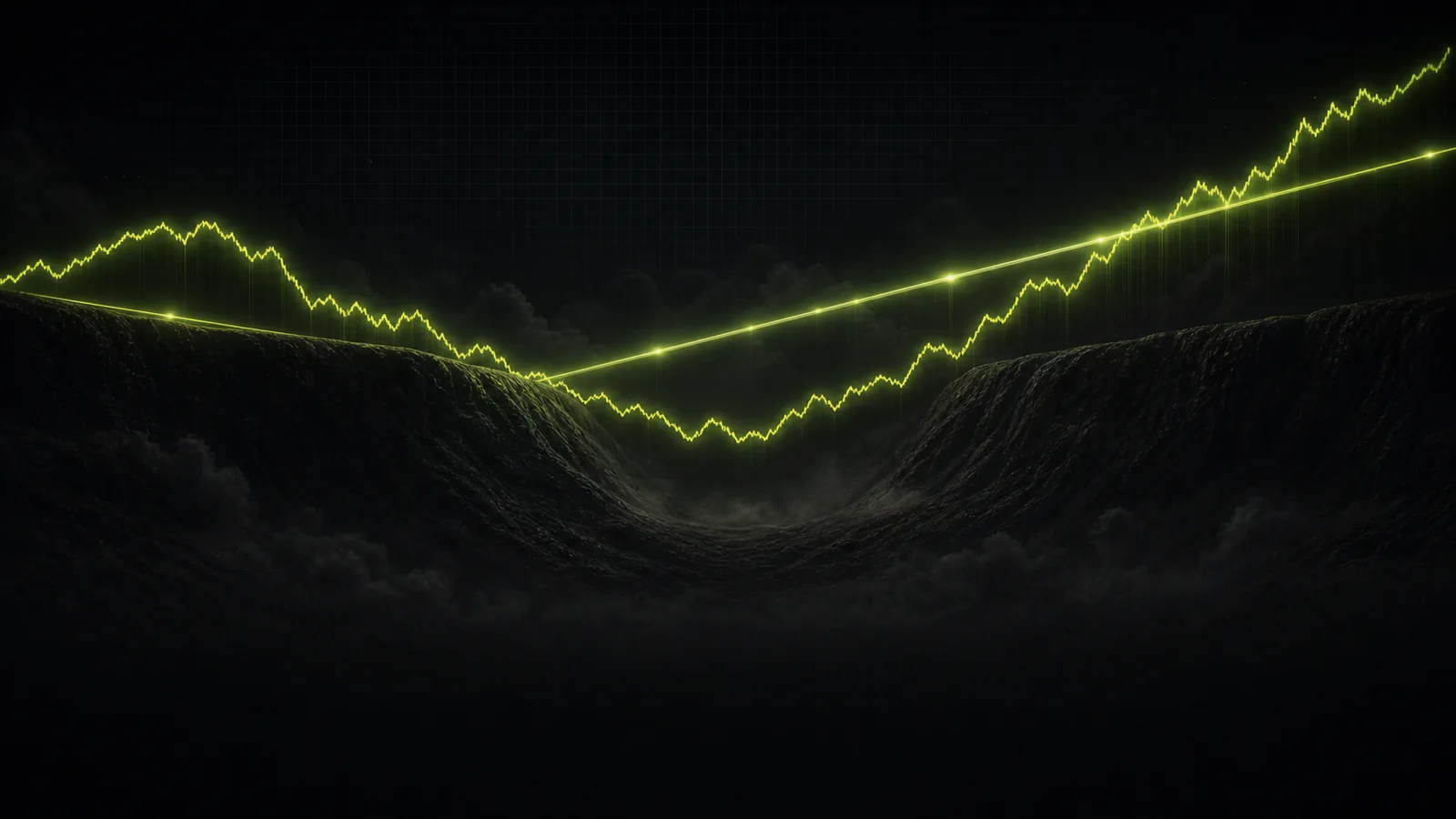
A lime equity line rides a steady guide rail through a valley
Delta-X Academy

Trusting Your Process Through a Drawdown

Original Delta-X illustration.
free9 min read

Process trust is the conviction to keep executing a sound, positive-expectancy method during a drawdown, when recent results are poor. It rests on separating the quality of your decisions from their short-run outcomes, so a string of losses that is within normal variance does not push you to abandon a working edge.

Target audience: Traders who tinker with or abandon a working method whenever it hits a normal drawdown.

Learning objectives

  • Define process trust and what it rests on.
  • Separate decision quality from short-run outcome.
  • Distinguish a normal drawdown from a broken method.
  • Hold a sound process through its drawdowns.

Definition

Process trust is the conviction to keep executing a sound, positive-expectancy method during a drawdown, when recent results are poor. It rests on separating the quality of your decisions from their short-run outcomes, so a string of losses that is within normal variance does not push you to abandon a working edge.

Why it matters

Drawdowns are the moment a trader is most tempted to change everything, and the moment doing so is most destructive, because abandoning a working method at its low point locks in the loss and discards the recovery. Process trust, grounded in knowing your method is sound and your drawdown is normal, is what lets you hold steady through the exact period that separates traders who survive from those who quit.

The drawdown temptation

Every method, however good, has drawdowns, stretches where the losses cluster and the equity curve slides. These periods feel like evidence that the method is broken, and they generate enormous pressure to change something: to tweak the rules, switch strategies, or stop entirely. The cruelty is that this pressure peaks right at the low, the worst possible moment to abandon an edge, because doing so realises the drawdown as a permanent loss and walks away just before the expected recovery. The temptation to act is strongest exactly when inaction is wisest.

Decisions are not outcomes

Process trust rests on a separation covered elsewhere in this academy: the quality of a decision is not the same as its outcome, because variance sits in between. A run of well-executed trades can lose, and that losing run tells you almost nothing about whether the method works, as long as the losses are within the range your method's own history would predict. Judging a sound process by a short, noisy sample is how traders talk themselves out of an edge. The method is to evaluate the decisions, which you control, and to expect the outcomes, which you do not, to be noisy in the short run.

Know normal from broken

Trust is not blind faith; it has a boundary. To hold a process through a drawdown, you need to know in advance what a normal drawdown for that method looks like, from its history or your testing, so you can tell an ordinary rough patch from a genuine breakdown. Inside the normal range, the correct action is to keep executing unchanged. Beyond it, when the drawdown is deeper or longer than the method has ever shown, that is real evidence worth investigating, calmly and after the fact, not in a panic mid-drawdown. Defining that boundary beforehand is what makes trust disciplined rather than stubborn.

Visual models

Process-outcome matrix: judge the decision, not the result; the lucky win is the trap
Process-outcome matrixA two-by-two matrix of process quality against trade outcome: a good process winning or losing should be repeated, a bad process losing should be fixed, and a bad process that wins is a dangerous lucky win to flag rather than celebrate.LOSSWINGOODBADprocessEarned winRepeat itCorrect lossVariance, repeat itDeserved lossFix the ruleLucky winDanger: do not repeatthe trapoutcome

Worked examples

Example 1: Quitting at the low

A trader with a tested, profitable method hits a drawdown that, while uncomfortable, is well within what the method has produced before. Convinced it has stopped working, they abandon it at the low and switch to something new, which promptly draws down too while the original method recovers strongly without them. They turned a normal, temporary drawdown into a permanent loss by quitting at exactly the wrong moment. A trader who knew the drawdown was within the method's normal range, and kept executing, would have ridden the recovery.

Common mistakes

Abandoning a working method at the low point of a drawdown.

Judging a sound process by a short, noisy run of losses.

Tweaking rules mid-drawdown in a search for relief.

Not knowing in advance what a normal drawdown looks like.

Confusing disciplined trust with stubbornly ignoring real evidence.

Myth vs reality

Myth

That a drawdown is proof the method has stopped working.

Reality

No paired reality note provided.

Myth

That a short run of outcomes reliably reflects decision quality.

Reality

No paired reality note provided.

Myth

That changing something during a drawdown reduces the risk.

Reality

No paired reality note provided.

Risk considerations

  • Abandoning a method at its low realises the drawdown and discards the recovery.
  • Without a defined normal range, every drawdown can feel like a breakdown.

Practice exercises

1. Define your normal drawdown

Establish in advance what a normal drawdown for your method looks like.

  1. From history or testing, find your method's typical and worst drawdowns.
  2. Write the range that counts as normal, where you keep executing unchanged.
  3. Write the boundary beyond which you would calmly investigate, after the fact.
  4. Commit to evaluating decisions, not the short-run outcome, during a drawdown.

Quiz

Q1. What does process trust rest on?

Q2. Why is abandoning a method during a drawdown so destructive?

Q3. How is disciplined trust different from stubbornness?

Next lesson

Thinking in Probabilities, Not Single Trades

Continue to next

This lesson is educational content only and is not financial, psychological, or medical advice. It describes patterns common among traders, which vary from person to person; if difficult emotions around trading or money are affecting your wellbeing, seek qualified support. Managing your psychology improves your decisions but does not remove the substantial risk of trading. Trade only with risk you can afford to lose.