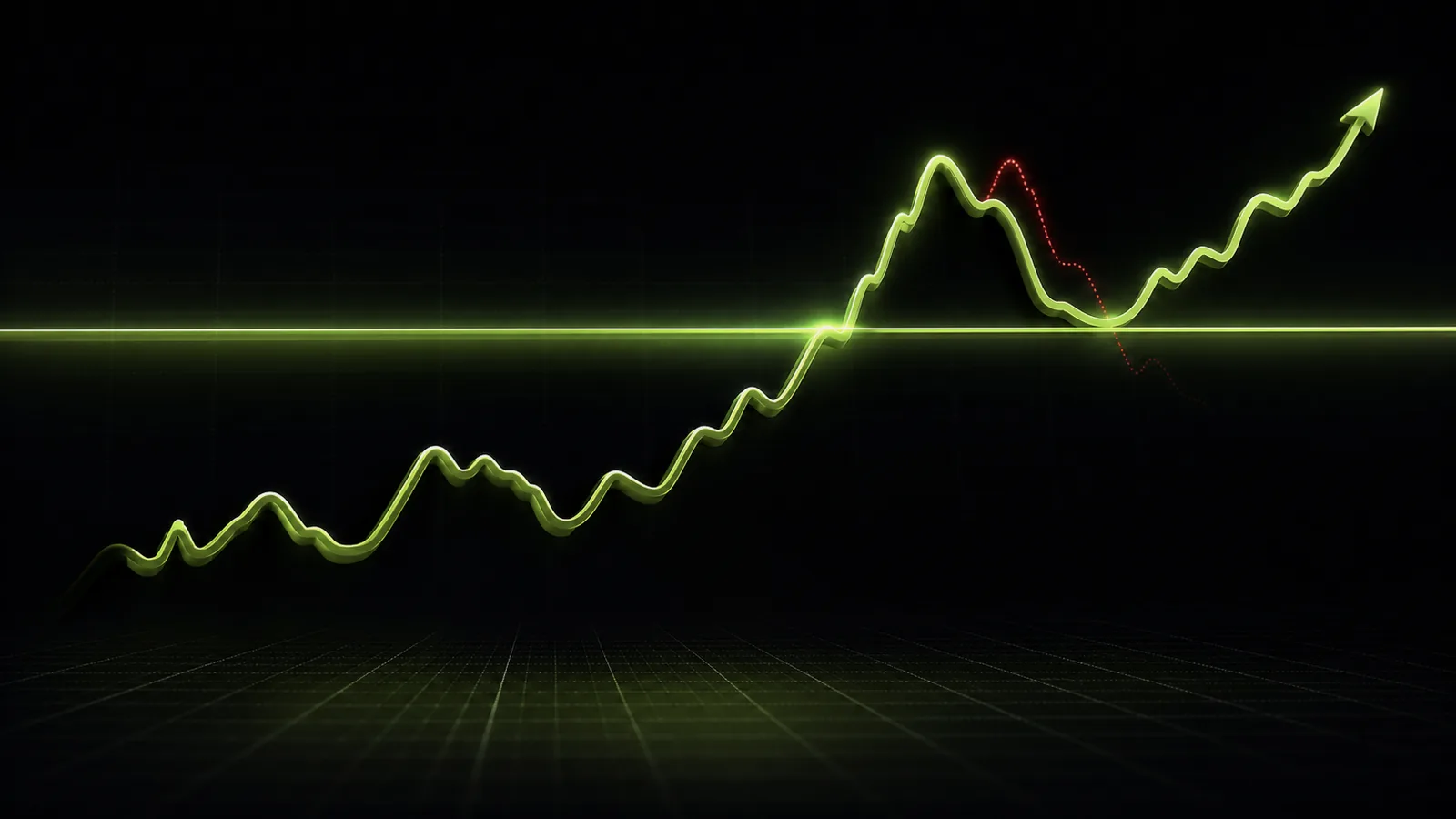
A clean breakout retests the broken level and continues higher
Delta-X Academy

Breakouts and the Retest

Original Delta-X illustration.
free9 min read

A breakout is when price moves decisively beyond a support or resistance boundary, signalling that the prior balance has given way. A retest is the frequent pullback to the broken level afterward; when the level holds in its new role, it confirms the breakout rather than denying it.

Target audience: Traders who keep buying breakouts that immediately reverse and stop them out.

Learning objectives

  • Distinguish a decisive breakout from a marginal poke through a level.
  • Explain why so many breakouts fail and reverse.
  • Use the retest as confirmation before committing.
  • Define invalidation for a breakout trade objectively.

Definition

A breakout is when price moves decisively beyond a support or resistance boundary, signalling that the prior balance has given way. A retest is the frequent pullback to the broken level afterward; when the level holds in its new role, it confirms the breakout rather than denying it.

Why it matters

Breakouts are among the most traded and most faked events on any chart, and the difference between a real one and a trap often comes down to the retest. Learning to wait for confirmation instead of chasing the first candle through a level filters out a large share of false breakouts, at the cost of a slightly later entry that is usually worth it.

What a real breakout looks like

A convincing breakout closes beyond the level with a decent body, not just a wick that pokes through and snaps back. Closing beyond the zone, ideally on a higher timeframe candle, says participants accepted the new price rather than rejecting it. A marginal break that leaves a long wick back inside the range is the opposite: the market tested the level and refused it. The first question on any breakout is whether price closed beyond the zone or merely touched past it.

Why breakouts fail

False breakouts are common because the boundaries of a range are exactly where stop orders cluster. A push beyond the level can be driven by those stops triggering rather than by genuine new demand, and once the stops are run, price falls back inside. This is sometimes deliberate and sometimes just mechanics, but the effect is the same: a clean-looking break that traps everyone who chased it. The cluster of orders that makes a level meaningful is the same cluster that makes its breakout easy to fake.

The retest as confirmation

After a genuine breakout, price often pulls back to the broken level, which should now act in the opposite role as a flip. If the old resistance now holds as support, the breakout is confirmed and the retest offers a lower-risk entry with a tight stop just back inside the old range. If price instead falls back through the level and closes inside, the breakout has failed. Waiting for the retest trades a little upside for a large improvement in the quality of the signal.

Visual models

Breakouts and fakeouts: a real break retests and holds; a fakeout pokes the level and reclaims back inside
Breakout versus fakeoutThe left panel shows a genuine breakout that pulls back, retests the broken level as support, and continues. The right panel shows a fakeout that pierces the level on a wick and closes back inside, trapping breakout buyers.level 225break1retest holds2real breaklevel 225false break1reclaim: trap2fakeoutconfirm the break with a held retest, not a single poke
Breakouts and fakeouts: a real break retests and holds; a fakeout pokes the level and reclaims back inside
Breakout versus fakeoutThe left panel shows a genuine breakout that pulls back, retests the broken level as support, and continues. The right panel shows a fakeout that pierces the level on a wick and closes back inside, trapping breakout buyers.level 225break1retest holds2real breaklevel 225false break1reclaim: trap2fakeoutconfirm the break with a held retest, not a single poke

Worked examples

Example 1: A confirmed breakout versus a trap

Two charts both break a 50 resistance. In the first, price closes the hour at 51, pulls back to 50.2, holds, and continues, a confirmed breakout with a clean retest. In the second, price wicks to 50.5 intrabar but closes the hour back at 49.6, a long upper wick and no acceptance, then falls. A trader who chased both got trapped in the second; a trader who waited for the close and the retest took only the first and skipped the trap entirely.

Common mistakes

Chasing the first candle through a level before it closes beyond the zone.

Ignoring the wick-versus-close distinction on the breakout candle.

Treating every pullback after a break as failure rather than a retest.

Setting the stop far away instead of just inside the old range.

Re-entering a failed breakout repeatedly without a changed reason.

Myth vs reality

Myth

That any move beyond a level is a tradeable breakout.

Reality

No paired reality note provided.

Myth

That waiting for a retest always costs more than it saves.

Reality

No paired reality note provided.

Myth

That a breakout cannot be engineered by stop-running.

Reality

No paired reality note provided.

Risk considerations

  • Breakout entries chased without confirmation have a high false-signal rate.
  • Stops cluster at boundaries, so spikes through a level are common and can reverse.

Practice exercises

1. Grade five breakouts

Find five past breakouts and grade each on the close and the retest after the fact.

  1. For each, note whether the breakout candle closed beyond the zone or only wicked.
  2. Check whether price retested the level and whether it held in the new role.
  3. Label each breakout as confirmed, failed, or unclear.
  4. Write where a confirmation entry and stop would have sat on the confirmed ones.

Quiz

Q1. What separates a real breakout from a marginal one?

Q2. Why are false breakouts so common?

Q3. How does a retest confirm a breakout?

Next lesson

Volume: The Basics

Continue to next

This lesson is educational content only and is not financial advice. Charts and indicators describe what price has already done; they do not predict the future or guarantee any outcome. No indicator works in every market or timeframe. Trading involves substantial risk, and you should trade only with risk you can afford to lose.