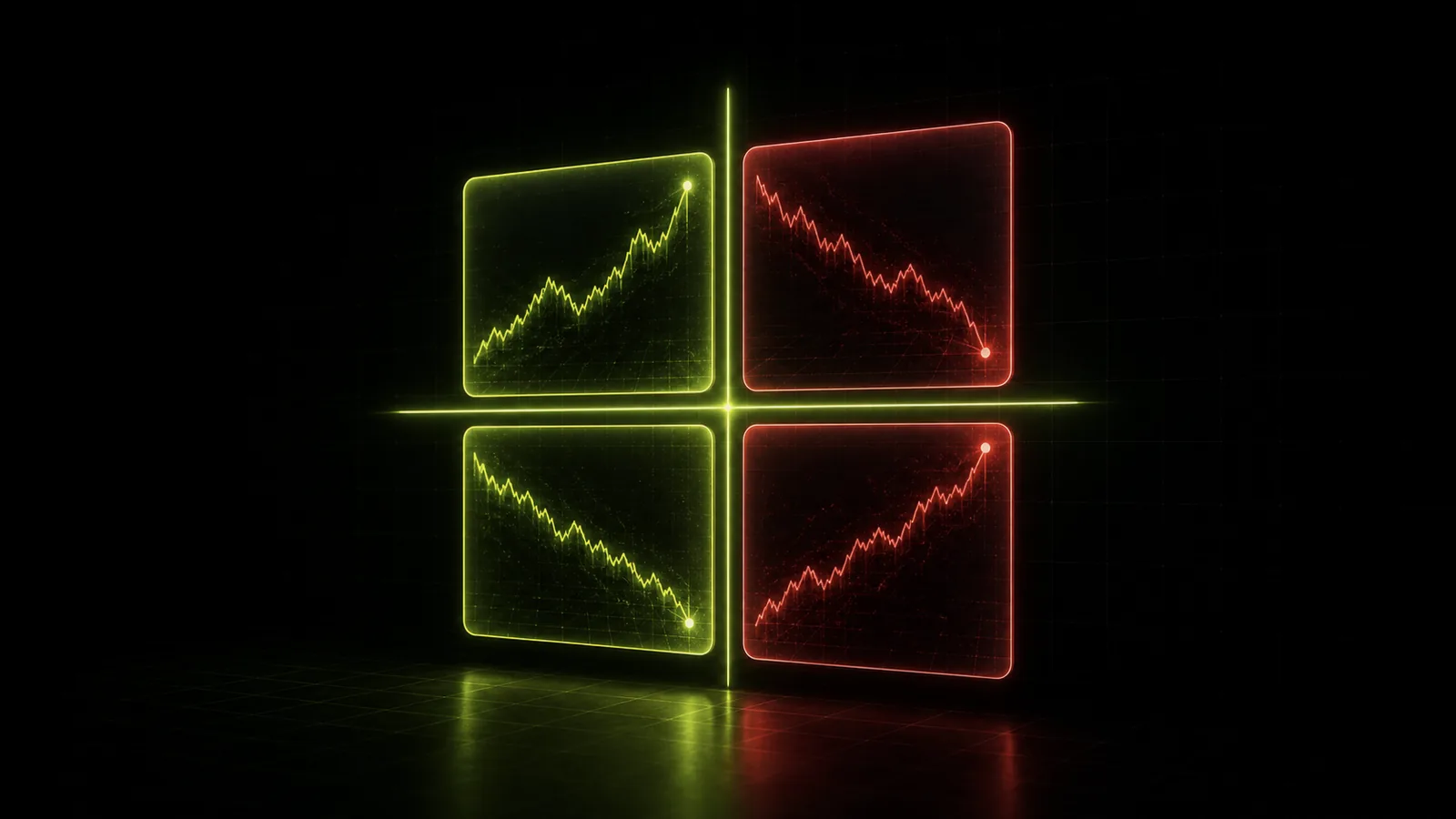
A two by two matrix separates good process from bad outcome
Delta-X Academy

The Trade Debrief: Process Versus Outcome

Original Delta-X illustration.
free9 min read

A trade debrief reviews each trade on two separate axes: the quality of the process, meaning did you follow your plan and rules, and the outcome, meaning did the trade win or lose. Because a good process can lose and a bad process can win, grading them separately is what lets you learn the right lessons.

Target audience: Traders who review trades by profit and loss alone and keep reinforcing the wrong habits.

Learning objectives

  • Separate the process quality of a trade from its outcome.
  • Explain why outcome-only review trains bad habits.
  • Grade a trade by whether the plan was followed.
  • Build a simple, repeatable debrief habit.

Definition

A trade debrief reviews each trade on two separate axes: the quality of the process, meaning did you follow your plan and rules, and the outcome, meaning did the trade win or lose. Because a good process can lose and a bad process can win, grading them separately is what lets you learn the right lessons.

Why it matters

If you judge trades only by whether they made money, you reinforce whatever you did on the winners, including rule-breaking that happened to pay, and you punish good discipline that happened to lose. Over time that trains exactly the wrong habits. Separating process from outcome lets you reward good decisions regardless of result and correct bad ones even when they profited, which is how a trading process actually improves.

Two axes, not one

Every closed trade has two independent properties. One is the outcome: did it win or lose, and by how many R. The other is the process: did you follow your plan, take a valid setup, enter on the trigger, size correctly, and manage as written. These are not the same thing, because the market adds randomness on top of your decisions. A perfectly executed trade can lose, and a sloppy, rule-breaking trade can win. Reviewing only the outcome collapses these two axes into one and throws away the information that actually tells you how you are trading.

Outcome-only review trains the wrong habits

If your debrief asks only whether the trade made money, then every winner is filed as good and every loser as bad. The problem is that this rewards a rule-break that happened to win, teaching you to do it again, and punishes a disciplined trade that happened to lose, teaching you to abandon good practice. Because results are noisy in the short run, outcome-only review reliably reinforces luck and erodes discipline. The trades you most need to learn from are the disciplined losers, which you should be proud of, and the lucky rule-breaking winners, which you should distrust.

Grade the process, log it simply

A useful debrief grades the process explicitly and separately from the result: did you follow the plan, yes or no, and what, if anything, would you do differently regardless of the outcome. Keep it light enough to actually do every time, a few fields per trade: the setup, the R result, whether the plan was followed, and one note. Over many trades this builds an honest record of your decision quality that the equity curve alone cannot show, and it is the raw material for fixing real mistakes rather than chasing noise.

Visual models

Process-outcome matrix: judge the decision, not the result; the lucky win is the trap
Process-outcome matrixA two-by-two matrix of process quality against trade outcome: a good process winning or losing should be repeated, a bad process losing should be fixed, and a bad process that wins is a dangerous lucky win to flag rather than celebrate.LOSSWINGOODBADprocessEarned winRepeat itCorrect lossVariance, repeat itDeserved lossFix the ruleLucky winDanger: do not repeatthe trapoutcome

Worked examples

Example 1: The disciplined loser and the lucky winner

One trade follows the plan exactly: valid setup, clean trigger, correct size, managed as written, and it still hits the stop for a minus-one-R loss. Another breaks the rules: no real setup, oversized, stop widened in the moment, and it happens to run to a profit. Judged by money, the first is bad and the second good. Judged by process, the first is a model trade to repeat and the second is a dangerous habit that got lucky. A debrief that separates the two records exactly that, and steers the trader toward more disciplined losers and away from lucky rule-breaks.

Common mistakes

Reviewing trades only by whether they made money.

Filing every winner as good, including rule-breaking ones.

Filing every disciplined loser as bad and abandoning the practice.

Making the debrief so heavy that it never gets done.

Chasing short-run results instead of grading decisions.

Myth vs reality

Myth

That a winning trade was necessarily a good trade.

Reality

No paired reality note provided.

Myth

That a losing trade was necessarily a bad trade.

Reality

No paired reality note provided.

Myth

That profit and loss alone tells you how well you are trading.

Reality

No paired reality note provided.

Risk considerations

  • Outcome-only review reinforces luck and erodes discipline over time.
  • Without a process record, real mistakes hide behind noisy results.

Practice exercises

1. Run a two-axis debrief

Review your last ten trades on process and outcome separately.

  1. For each trade, record the R outcome in one column.
  2. In another column, mark whether you followed the plan, yes or no.
  3. Find your disciplined losers and your rule-breaking winners.
  4. Write one process change to repeat the former and avoid the latter.

Quiz

Q1. What two axes does a trade debrief separate?

Q2. Why does outcome-only review train the wrong habits?

Q3. Which trades should you most want to learn from?

Path complete

You have reached the end of this path

Nice work finishing the path. Revisit any lesson to reinforce it, or explore another path in the academy.

Back to the academy

This lesson is educational content only and is not financial advice. No entry, exit, or trade-management rule works in every market or every trade; the right choice depends on your strategy, timeframe, and the conditions at the time. Trading involves substantial risk, and disciplined management cannot make a negative-edge strategy profitable. Trade only with risk you can afford to lose.