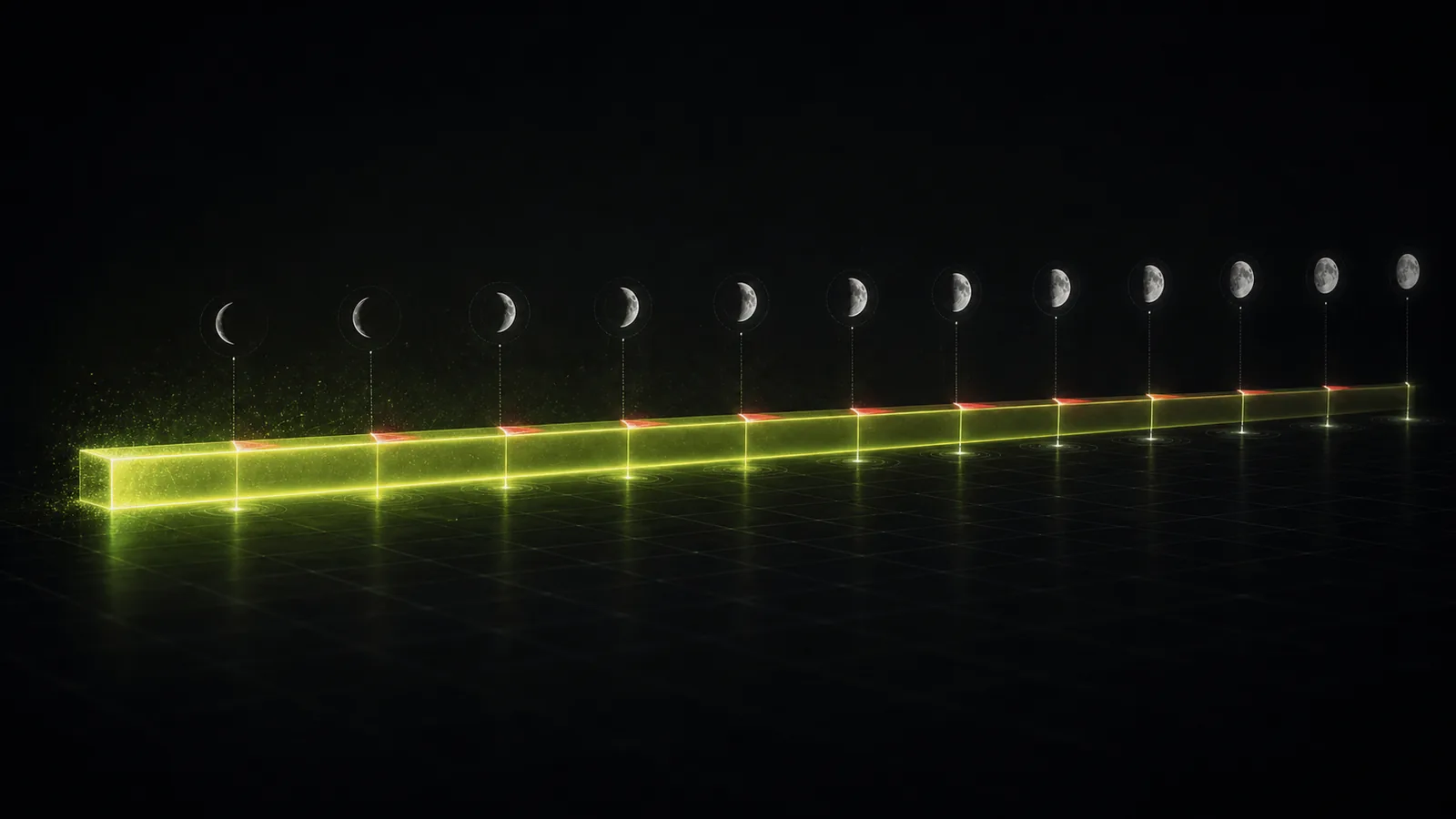
A held position thins slightly across successive night markers
Delta-X Academy

Overnight Costs: Funding, Rollover, and Swap

Original Delta-X illustration.
free8 min read

Many leveraged positions accrue a recurring cost simply for being held over time: forex pays a swap based on the interest rate difference between the two currencies, CFDs are charged daily overnight financing, crypto perpetuals exchange a periodic funding payment between longs and shorts, and futures carry an implicit cost through rolling between contracts. These holding costs are separate from the spread and can add up on longer holds.

Target audience: Traders who hold positions overnight or longer and need to count the financing that accrues.

Learning objectives

  • Describe the overnight cost form for each main instrument.
  • Explain why a flat position can still lose to financing.
  • Recognise that funding can be a credit as well as a charge.
  • Factor holding costs into longer holds.

Definition

Many leveraged positions accrue a recurring cost simply for being held over time: forex pays a swap based on the interest rate difference between the two currencies, CFDs are charged daily overnight financing, crypto perpetuals exchange a periodic funding payment between longs and shorts, and futures carry an implicit cost through rolling between contracts. These holding costs are separate from the spread and can add up on longer holds.

Why it matters

A position that is flat on price can still lose money to overnight costs, so traders who hold for days or weeks must count these or watch a winning idea bleed out in financing. The cost differs by instrument and can even be a credit in some cases, so understanding the form it takes for what you trade is part of knowing the true cost of a position, especially for swing and longer-term styles.

The same idea, different forms

Holding a leveraged position over time generally costs money, but the form varies by instrument. In forex you pay or receive a swap based on the interest rate differential between the two currencies in the pair, so it can be a charge or a small credit depending on direction. On CFDs you are charged an overnight financing fee each day a position is held, reflecting the cost of the leverage the broker extends. With crypto perpetuals, a funding payment is exchanged periodically between longs and shorts to keep the contract anchored to the spot price, paid by whichever side the mechanism favours. Futures have no explicit overnight charge but carry an implicit cost through rolling between expiries.

A flat position can still bleed

The key consequence is that price is not the only thing that moves your account on a held position. A trade that is exactly flat on price after a week can still be down, because each night or funding interval has quietly deducted a financing cost. For short-term traders who close out the same day, these costs are often irrelevant; for swing and position traders who hold for days or weeks, they accumulate and can turn a marginally profitable idea into a loss. The cost is small per interval and easy to ignore, which is exactly why it catches people out over longer holds.

Sometimes a credit, always worth knowing

Overnight costs are not always a charge. A forex swap can be positive if you hold the higher-yielding side of a pair, and perpetual funding flips sign depending on which side the market is crowded on, so a position can occasionally earn rather than pay. The point is not that holding always costs you, but that there is always a financing consequence to holding, and its direction and size depend on the instrument, the direction, and conditions. Before holding any leveraged position overnight, know what its financing will be, so it is a deliberate choice rather than a surprise on the statement.

Worked examples

Example 1: Right on price, down on the trade

A swing trader holds a leveraged position for two weeks, and at the end the price is almost exactly where they entered, so they expect to be roughly flat. Instead the account is down, because every night a financing charge was deducted, and over two weeks those small charges added up to a real loss on a position that went nowhere. A trader who had checked the overnight cost before holding would have known the idea needed to move enough to clear the financing, or would have chosen a different instrument or timeframe. The price was flat; the holding cost was not.

Common mistakes

Holding a leveraged position overnight without checking its financing.

Assuming a flat price means a flat result over a long hold.

Ignoring that financing accumulates over days and weeks.

Forgetting that swap and funding can be a credit, not just a charge.

Applying a day-trader's indifference to costs on a swing position.

Myth vs reality

Myth

That only the price affects a held position's result.

Reality

No paired reality note provided.

Myth

That overnight costs are always a charge against you.

Reality

No paired reality note provided.

Myth

That small per-night costs are negligible over long holds.

Reality

No paired reality note provided.

Risk considerations

  • Financing accumulates and can turn a marginal idea into a loss over time.
  • The cost's direction and size depend on the instrument, direction, and conditions.

Practice exercises

1. Price the hold

For an instrument you might hold, find the overnight cost and what it adds up to over your typical hold.

  1. Identify the financing form for your instrument: swap, overnight fee, funding, or roll.
  2. Find the cost per night or funding interval, and whether it is a charge or credit.
  3. Multiply it by the number of nights or intervals of a typical hold.
  4. Decide how far price must move to clear that cost before the trade profits.

Quiz

Q1. What form do overnight costs take across the main instruments?

Q2. Why can a position that is flat on price still lose money?

Q3. Are overnight costs always a charge?

Next lesson

Market Hours and Sessions

Continue to next

This lesson is educational content only and is not financial advice or a recommendation to trade any instrument. Contract specifications, leverage limits, costs, and availability vary by broker, exchange, and jurisdiction, and some instruments are restricted or banned for retail traders in some regions; any figures here are illustrative, so verify the exact specs with your own provider. Leverage amplifies losses as much as gains and can result in losing more than your initial deposit. Markets carry substantial risk. Trade only with risk you can afford to lose.