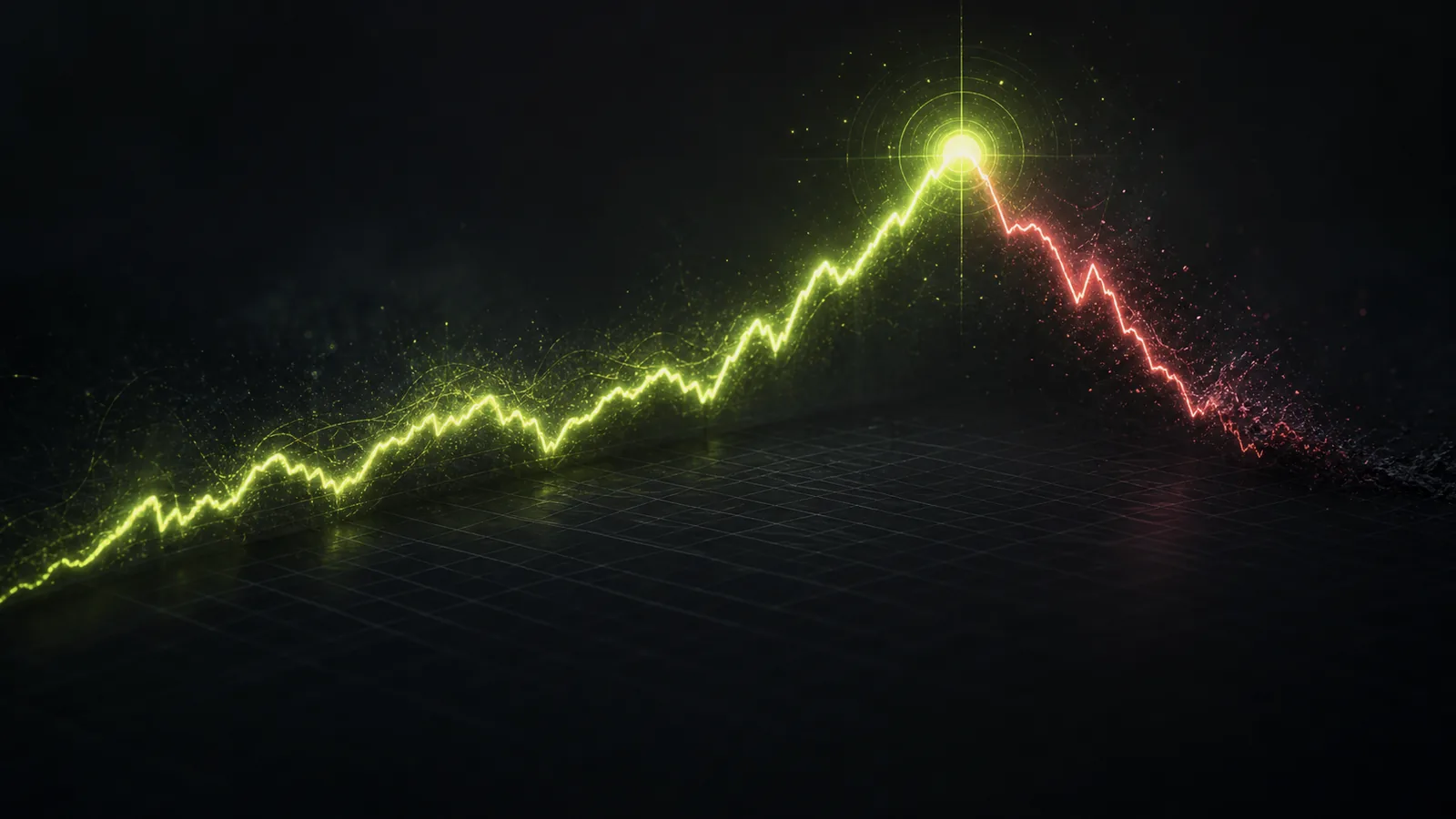
A price line runs up into an event node then unwinds back down
Delta-X Academy

Markets Trade Expectations, Not News

Original Delta-X illustration.
reader8 min read

Markets are forward-looking: at any moment price already reflects what participants collectively expect to happen, so a piece of news moves price only to the extent it differs from what was already expected. The headline itself is rarely the driver; the gap between the outcome and the prior expectation is.

Target audience: Traders who expect good news to lift price and bad news to drop it, and keep getting caught when it does the opposite.

Learning objectives

  • Explain why price already reflects the expected outcome.
  • Describe the buy-the-rumour, sell-the-news pattern.
  • Reframe a release as expected versus actual, not good versus bad.
  • Watch the surprise rather than the headline.

Definition

Markets are forward-looking: at any moment price already reflects what participants collectively expect to happen, so a piece of news moves price only to the extent it differs from what was already expected. The headline itself is rarely the driver; the gap between the outcome and the prior expectation is.

Why it matters

This single idea explains why price so often does the opposite of the news, rallying on a poor report or selling a strong one. If you trade the headline rather than the surprise, you will be repeatedly wrong-footed. Understanding that price discounts the expected and reacts only to the unexpected is the foundation everything else in this path rests on.

Price already reflects the expected

At any time, price embeds the collective expectation of the future, so if nearly everyone expects a rate cut, that cut is already reflected in the price before it is announced. When it then arrives exactly as expected, there is little genuinely new information, and therefore little reason for price to move. Only a deviation from what was expected is new. This is why being priced in is one of the most important ideas in trading: the anticipated outcome is, by the time it occurs, mostly old news.

Buy the rumour, sell the news

Because price moves ahead of expected events, it often rises in anticipation and then reverses when the event merely confirms what was expected, the move into the event and the unwind on the fact. The classic shape: an asset climbs for weeks on the expectation of good news, then falls the moment that good news is officially confirmed, because the expectation, not the fact, drove the run, and once the fact arrives there is nothing left to price. This is a tendency, not a rule, and it breaks when the event itself delivers a genuine surprise.

Watch the surprise, not the headline

The practical habit is to ask, before any scheduled event, what is already expected, and then to watch the gap between the outcome and that expectation rather than the outcome alone. A strong number that is nonetheless weaker than the consensus is, to the market, a disappointment, and can sell off. Reframing every release as expected-versus-actual, rather than good-versus-bad, is what stops the news from constantly wrong-footing you, and it is the lens the rest of this path applies to every driver.

Worked examples

Example 1: The good news that sold off

A company is widely expected to post strong earnings, and its price climbs into the report on that expectation. The earnings come in strong, exactly as expected, and the price immediately falls. A trader reading the headline, strong earnings, is baffled. A trader who understood that the strength was already priced sees it clearly: there was no positive surprise, the buyers who wanted in had already bought on the expectation, and with nothing new to price, the anticipatory move unwound. The news was good; the surprise was not, and price trades the surprise.

Common mistakes

Trading the headline as good or bad instead of the surprise versus expectations.

Ignoring what was already priced in before an event.

Expecting good news to always lift price and bad news to always drop it.

Being surprised when price runs into an event and reverses on confirmation.

Treating priced in as a vague excuse rather than a real mechanism.

Myth vs reality

Myth

That good news must lift price and bad news must drop it.

Reality

No paired reality note provided.

Myth

That the headline figure is what moves the market.

Reality

No paired reality note provided.

Myth

That an outcome exactly in line with expectations should produce a large move.

Reality

No paired reality note provided.

Risk considerations

  • Anticipatory moves can unwind violently the moment an expected event is confirmed.
  • Priced in is a judgement, not a measurement, so you can misjudge what is actually expected.

Practice exercises

1. Expected versus actual

Before a scheduled event, write down the consensus and watch the actual against it.

  1. Pick one upcoming scheduled release for an asset you follow.
  2. Write the consensus expectation before the release.
  3. When it lands, note the actual figure and the gap to consensus.
  4. Compare the price reaction to the surprise, not to whether the news was good or bad.

Quiz

Q1. Why does price often move the opposite way to the news?

Q2. What is buy the rumour, sell the news?

Q3. How should you reframe a scheduled release?

Next lesson

The Economic Calendar and Consensus

Continue to next

This lesson is educational content only and is not financial advice. Macroeconomic analysis is interpretive and frequently wrong; the relationships it describes are tendencies that vary by regime and break down, not laws, and a correct macro view does not produce a profitable trade. Nothing here is a forecast or a recommendation to buy or sell. Markets carry substantial risk. Trade only with risk you can afford to lose, and let price and your own risk rules, not a macro narrative, govern any position.