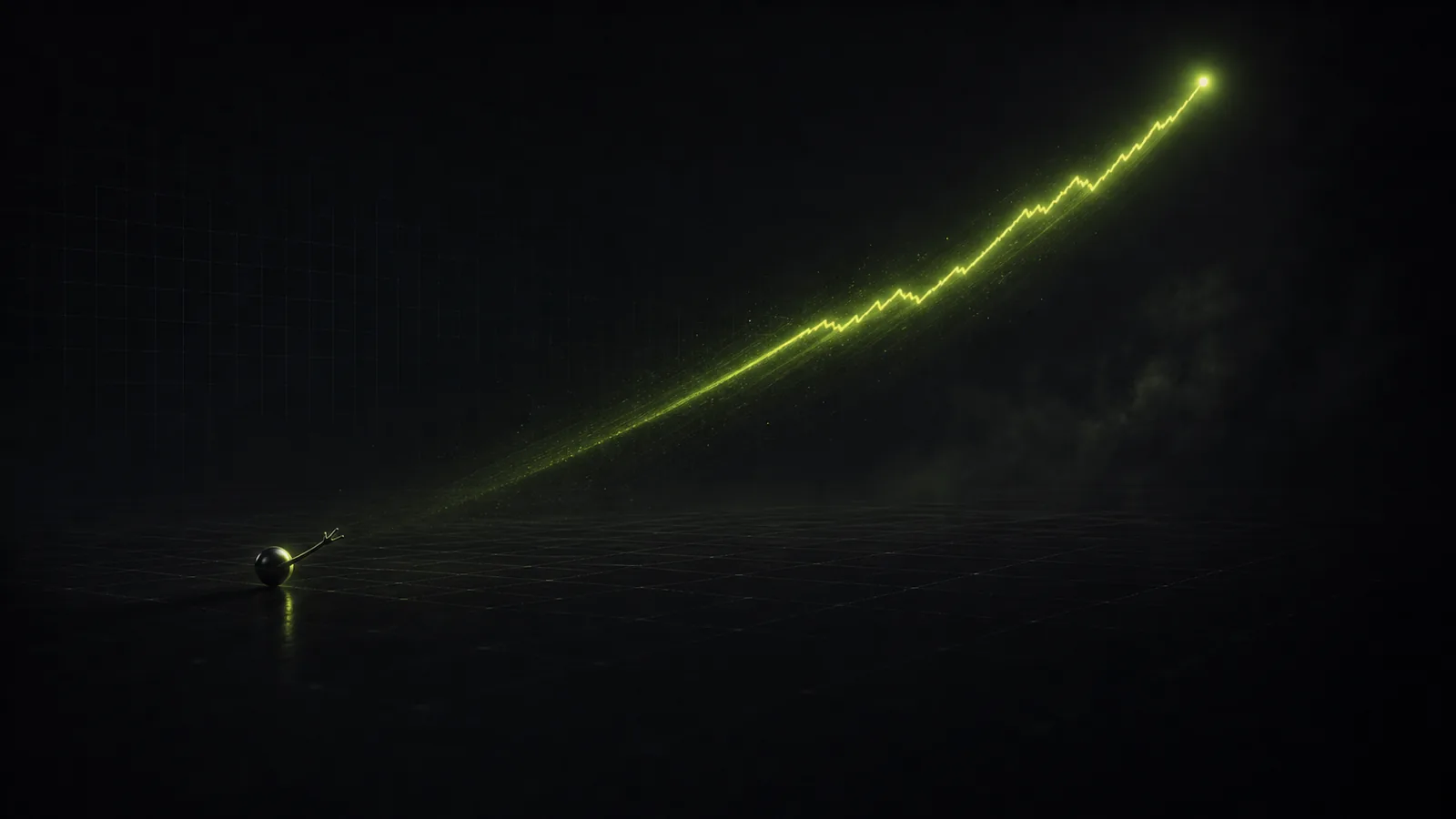
A lime move races away while a small marker chases behind
Delta-X Academy

FOMO and Chasing the Move

Original Delta-X illustration.
free7 min read

The fear of missing out, or FOMO, is the urge to enter a trade because price is moving and you cannot bear to watch it go without you. It pushes you in late, after the good entry has passed, chasing a move rather than trading a plan, usually at a worse price and a worse risk.

Target audience: Traders who jump into fast moves late, after the clean entry, and get caught in the pullback.

Learning objectives

  • Define FOMO and the entries it produces.
  • Explain why a missed move costs nothing but a chase costs money.
  • Recognise the feeling as a signal to wait, not act.
  • Replace chasing with waiting for the next setup.

Definition

The fear of missing out, or FOMO, is the urge to enter a trade because price is moving and you cannot bear to watch it go without you. It pushes you in late, after the good entry has passed, chasing a move rather than trading a plan, usually at a worse price and a worse risk.

Why it matters

FOMO turns a missed opportunity, which costs nothing, into a real loss, which costs money. The trades it produces are the late, chased entries right before a pullback, where your stop is far and your edge is gone. Recognising the feeling as a poor signal, rather than a call to action, is what keeps a missed move from becoming a bad trade.

The urge to not be left behind

FOMO is the discomfort of watching a move happen without you and the urge to fix that feeling by getting in. The problem is timing: by the time a move is obvious enough to trigger the fear, the low-risk entry has usually already passed, so FOMO puts you in late, high, and with a stop now far away. You are no longer trading a plan; you are chasing relief from the feeling of being left out. The trade is about your emotion, not about a setup, which is the same flaw as a revenge trade pointed in a different direction.

A missed move is free

The core reframe is that missing a trade costs nothing. There is no loss on a trade you did not take, only the imaginary pain of the gain you picture yourself missing. Chasing that imagined gain, on the other hand, costs real money when the late entry gets stopped. There is almost always another setup, and the supply of opportunities is effectively endless, so no single missed move needs to matter much. A trader who internalises that a missed move is free, and a chased move is expensive, removes much of the power FOMO has over them.

Wait for your setup, not the move

The practical antidote is to anchor entries to your defined setup rather than to price action that is already running. If the move has left your setup behind, the answer is not to chase it but to wait, either for a pullback that offers a fresh, defined entry, or for the next opportunity entirely. This is uncomfortable, because waiting while others apparently profit feels like losing. But the discipline of only entering on your terms, and letting un-set-up moves go, is precisely what separates a plan from a reaction. The feeling of FOMO is a cue to wait, not a cue to buy.

Worked examples

Example 1: Chasing the breakout

A market breaks out and runs hard. A trader who missed the clean entry watches it climb, feels the pull of being left behind, and buys near the top of the run with a stop far below. Price pulls back, as moves do, and clips the distant stop for a real loss before resuming. The trader who instead let the move go and waited for a pullback to a defined level either got a clean, low-risk entry or simply took the next setup. The first trader converted a free miss into a paid loss; the second kept the miss free.

Common mistakes

Entering late because price is already moving fast.

Treating a missed move as a loss rather than a free non-event.

Chasing with a far stop and no defined risk.

Believing this specific move is the one you cannot miss.

Acting on the feeling of FOMO instead of waiting it out.

Myth vs reality

Myth

That missing a trade costs you money.

Reality

No paired reality note provided.

Myth

That this opportunity is rare and must be taken now.

Reality

No paired reality note provided.

Myth

That the urgency of FOMO is a reliable trading signal.

Reality

No paired reality note provided.

Risk considerations

  • Chased entries carry a far stop and little or no edge.
  • The supply of setups is effectively endless, so no single miss matters.

Practice exercises

1. Reframe the missed move

Practise letting un-set-up moves go and waiting for your defined entry.

  1. Note a recent move you chased and what the late entry cost you.
  2. Confirm what a missed move would have cost: nothing.
  3. Define the setup or pullback that would have been a valid entry instead.
  4. Write the reminder: a miss is free, a chase is expensive.

Quiz

Q1. What entries does FOMO produce?

Q2. Why is a missed move free?

Q3. What should the feeling of FOMO cue you to do?

Next lesson

Overconfidence After a Winning Streak

Continue to next

This lesson is educational content only and is not financial, psychological, or medical advice. It describes patterns common among traders, which vary from person to person; if difficult emotions around trading or money are affecting your wellbeing, seek qualified support. Managing your psychology improves your decisions but does not remove the substantial risk of trading. Trade only with risk you can afford to lose.